
Back to Leansta Voices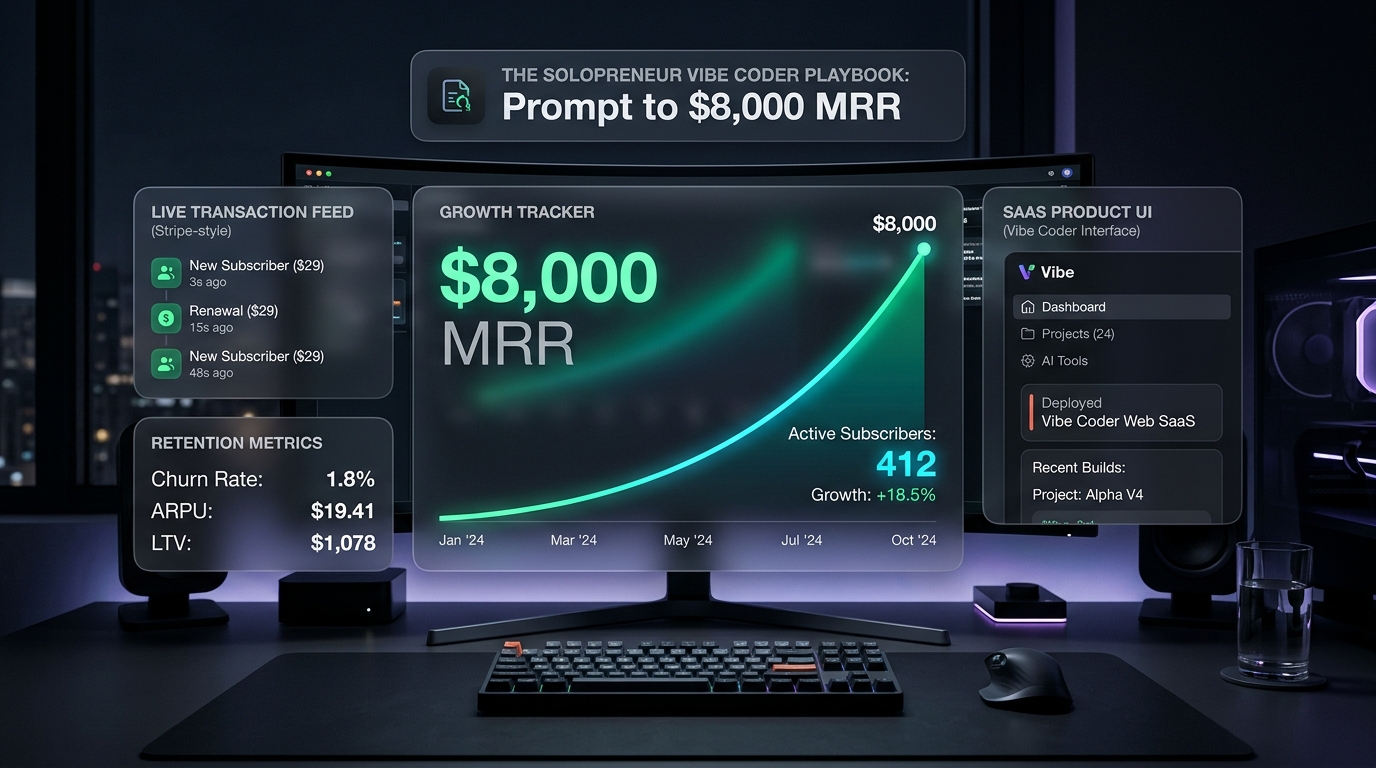
TUTORIALS
From Prototype to $8,000 MRR with Cursor and Supabase: The Pragmatic Vibe Coder's Playbook
KS
By Kenji Sato
Independent Builder • Contributor
Published Mar 21, 2026
9 min read
How to combine rapid AI generative velocity with rock-solid database schema design, Row-Level Security, and payment idempotency.
The term "vibe coding" is often misunderstood as reckless, untested hacking. In reality, modern elite builders use frontier AI tools for raw velocity while maintaining extreme engineering discipline in data modeling and security.
Here is the exact playbook I used to build and scale a SaaS product to $8,000 Monthly Recurring Revenue (MRR) in 90 days.
1. Stack Architecture: Optimized for Flow
• Frontend & Fullstack: Next.js 15 App Router with Server Actions.
• Database & Auth: Supabase (PostgreSQL with Row-Level Security).
• IDE & AI Refactoring: Cursor with custom .cursorrules.
• Payments: LemonSqueezy with webhook idempotency.
2. The 12-Rule .cursorrules Configuration
The biggest secret to productive vibe coding is instructing Cursor never to guess your database schema. In our .cursorrules:
• Always generate Zod schemas matching database tables.
• Enforce strict TypeScript types; ban "any" types.
• Never write direct SQL queries without parameterized bindings.
• Always wrap Stripe/LemonSqueezy webhooks in database transactions.
3. Database Migration Hygiene
Never let an AI editor apply destructive SQL alterations to production. All schema changes must be generated as versioned migrations in Supabase and audited through git pull requests.
4. Customer Acquisition via Verified Marketplaces
Instead of spending thousands on ads, we published our software deliverables directly on verified builder platforms like Leansta. Verified reviews and audited GitHub repositories generated our first 40 paying B2B customers.
Peer-reviewed community submission. Built, not claimed.