Back to Leansta Voices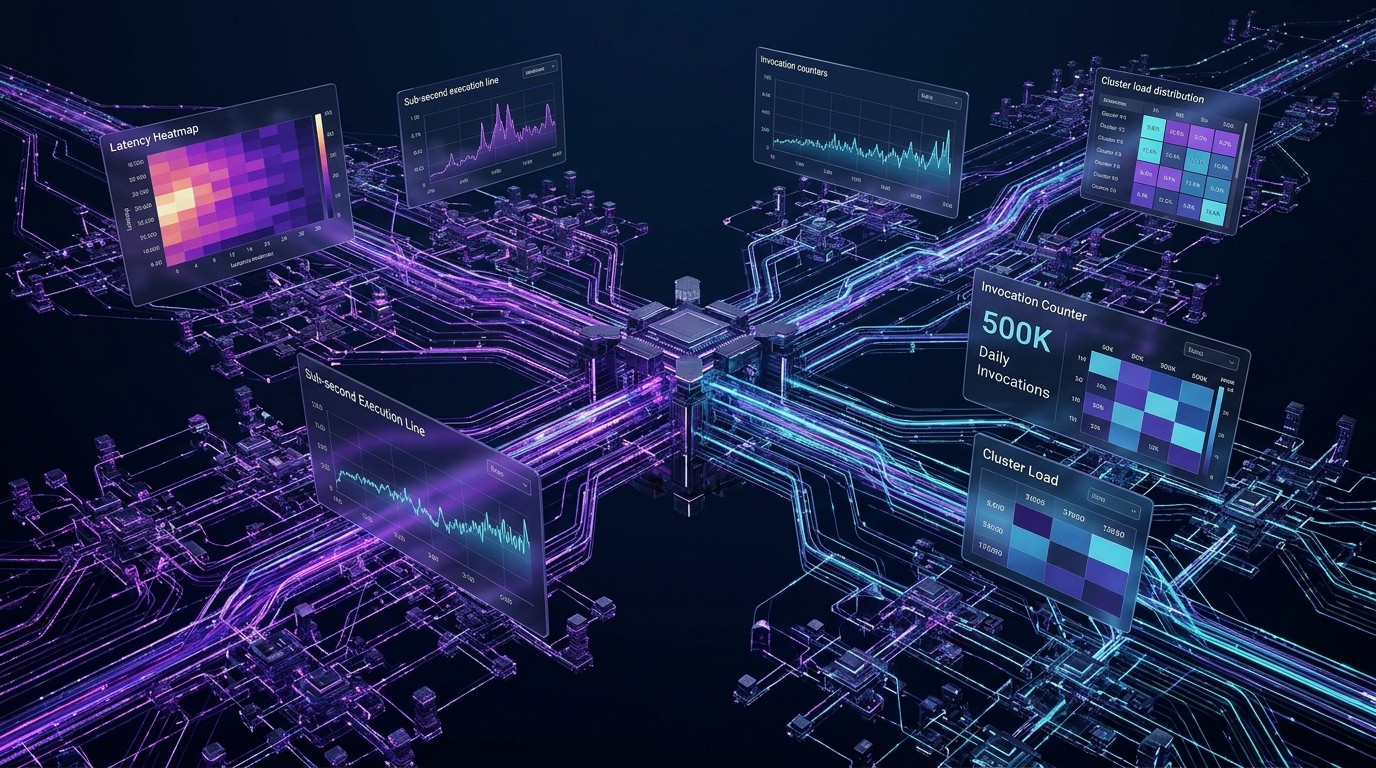
ARCHITECTURE
Architecting Production AI Agent Swarms with DeepSeek-R1 and Fastify: Lessons from 500k Daily Invocations
DV
By David Vance
Independent Builder • Contributor
Published Mar 22, 2026
12 min read
Detailed architectural retrospective on managing concurrency, state persistence, token budgets, and circuit breakers in enterprise multi-agent workflows.
When scaling an agentic system from 1,000 queries a week to 500,000 daily invocations, every theoretical edge case becomes an hourly operational reality.
In this deep dive, I share the architectural blueprint and hard-earned lessons from running high-concurrency multi-agent swarms.
1. The Monolithic Prompt Trap
Our initial version relied on a single LLM prompt with 14 tool declarations. At low volume, it looked magical. But at scale:
• Hallucination rate reached 8.4%.
• Tool selection errors compounded on multi-step workflows.
• Latency variance was wild (ranging from 2.5s to 28s).
2. The Supervisor-Worker Topology
We decomposed the monolithic prompt into a typed StateGraph:
• Orchestrator Node: Analyzes input, determines necessary sub-tasks, and tracks the global execution state.
• Specialized Worker Nodes: Each has access to exactly 1 or 2 scoped tools (e.g., SQL Worker, Document Parser, Email Formatter).
• Verifier Node: Inspects worker output before final emission.
3. Persistent State & Concurrency Control
We run Fastify servers with PostgreSQL checkpointers. Every state transition is recorded as an immutable event row with a thread_id and checkpoint_id. If an LLM call fails mid-workflow, the supervisor restarts from the last valid checkpoint rather than restarting the entire conversation.
4. Preventing Infinite Agent Loops
To eliminate infinite circular calls between agents, we enforce:
• Hard recursion limit: Maximum 6 state transitions per user request.
• Token Budget Cap: If total tokens consumed across all sub-agents exceed 15,000, the supervisor immediately surfaces a human escalation ticket.
5. Results & Benchmark
• Execution Reliability: 99.6% task completion without manual intervention.
• Average End-to-End Latency: 2.3 seconds across 500k daily requests.
• Cloud Cost Reduction: 42% decrease in monthly inference spend via intelligent model routing.
Peer-reviewed community submission. Built, not claimed.